
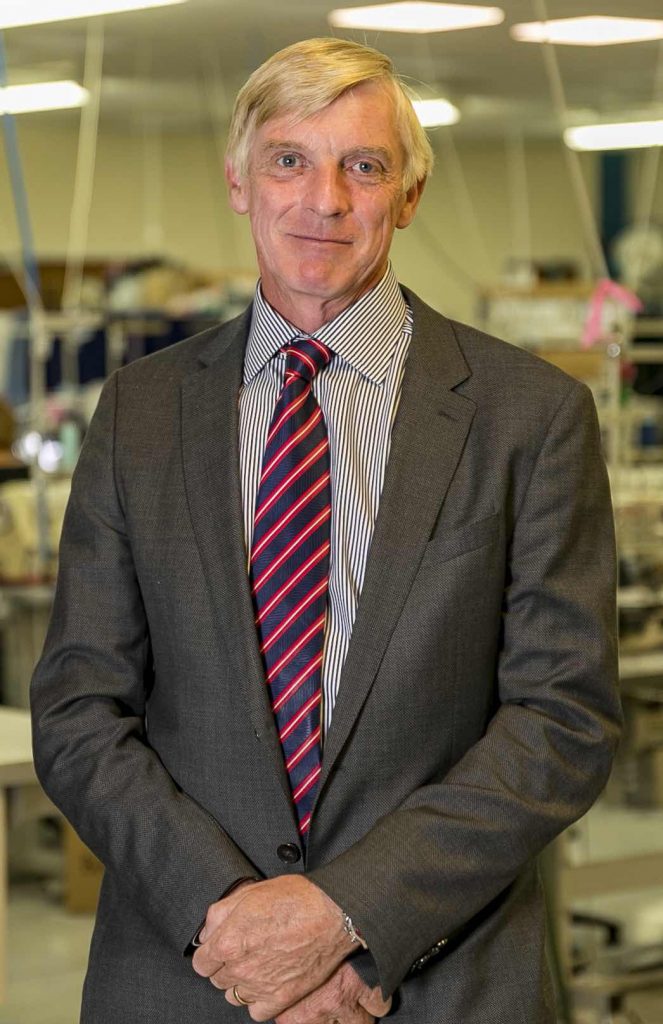
Ground-breaking research into effective treatment of Scoliosis has been co-authored by Martin Matthews, managing director of Redruth-based DM Orthotics.
Entitled ‘The classification of Scoliosis braces’ and published in the European Spine Journal, the paper’s results will be used worldwide in the ‘education, practice and overall growth of conservative approaches to spinal deformities.’
Martin began his career as a paediatric orthotist at White Lodge Children’s Centre in Surrey before going on to the Norfolk and Norwich University Hospital Foundation Trust, where he set up a full paediatric service for children. Over the years he became aware that rigid bracing didn’t seem to improve spinal curves, known as scoliosis, in children with Cerebral palsy.
“When patients came back for their repeated annual anniversary casting, their spinal curves had progressed so far they often required surgical intervention,” he said. “I didn’t think that was right.”
Dynamic movement orthoses (DMOs) are very different to rigid, moulded plastic braces as they are totally flexible in all planes, fit closely to the skin and correct body or limb dysfunction without causing muscle atrophy.
“I realised how very powerful DMOs could be early on when a six-year-old child came to see me with a 70-degree spinal curve,” said Martin. “A year later, the curve had reduced to 35 degrees. That’s the difference a good orthosis can make.”
Martin launched DM Orthotics in 2005 to improve the lives of children and adults facing neuro-muscular challenges. Regarded as a leading authority on the use of DMOs in managing conditions like Cerebral Palsy, Hemiplegia, Ataxia, Dystonia and Scoliosis, he has been developing patented DMOs for the last 22 years.
Chloe Sharland, from Exeter, is one of the many people benefiting from that considerable expertise. As a young teenager with Scoliosis, she had a 50-degree spinal curve which involved rotation that made mobility difficult. She and her mother went to see Martin and he fitted her with a structural scoliosis suit that had specially designed panels.
“The suit made everything more bearable because it was helping my body combat gravity,” she said. “My body wanted to collapse, but the suit held me together. It helped me attend four lessons in a day rather than two and gave me that bit of extra energy to go to dance classes.”
DM Orthotics manufactures a range of clinically proven products and currently exports to more than 25 countries.
Visit the website or find out more here.